In Boston’s crowded North End neighborhood stood a giant steel tank, 50 feet tall and 90 feet wide, holding 2.3 million gallons of molasses. The syrup was destined for industrial alcohol production, and the Purity Distilling Company had built the tank in a hurry in 1915 — so hurriedly that it leaked from day one. Neighborhood kids would collect the dripping molasses in cans. The company’s response to complaints was legendary in its cynicism: they painted the tank brown so the leaks would be harder to see.
January 15, 1919 was unseasonably warm — around 40°F after a cold snap. At about 12:30 in the afternoon, residents heard a rapid metallic popping, like gunfire. It was the tank’s rivets shearing off one by one. Then the entire structure gave way.
What followed defied belief. A wave of molasses estimated at 25 feet high burst through the neighborhood at roughly 35 miles per hour — far faster than anyone could run. The dense wall of syrup crushed buildings, snapped the steel supports of the elevated railway, tossed a truck into Boston Harbor, and flooded the streets waist-deep. Twenty-one people lost their lives and about 150 were injured. Rescue efforts were agonizing: molasses hardens as it cools, and the January air was turning the entire disaster zone into sticky cement.
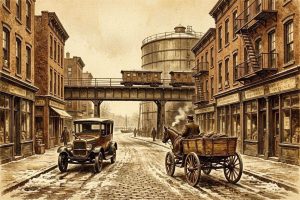
Cleanup took weeks. Crews sprayed seawater from fireboats and spread sand across the district. But molasses had traveled everywhere — tracked by boots and cart wheels across the city, onto trolley seats, payphones, and doorknobs. For months, Bostonians said, everything you touched was sticky.
The disaster changed America. The resulting class-action lawsuit — one of the first of its kind against a major corporation — revealed the tank had never been properly tested. The company was found responsible and paid out today’s equivalent of millions. The case helped usher in the modern era of engineering certification and building safety codes nationwide.
And the strangest legacy of all? Generations of North End residents have insisted that on hot summer days, a faint sweet smell still rises from the old streets — Boston’s stickiest ghost, refusing to leave.