On November 24, 1971 — the day before Thanksgiving — a middle-aged man in a dark suit and black tie bought a one-way ticket from Portland, Oregon to Seattle under the name “Dan Cooper.” He took seat 18C, lit a cigarette, and ordered a bourbon and soda.
Shortly after takeoff, he handed a note to flight attendant Florence Schaffner. She assumed it was a phone number and slipped it into her pocket. Cooper leaned in and said quietly: “Miss, you’d better look at that note.”
The note said he had a bomb in his briefcase. He opened it just enough to show her a tangle of wires and red cylinders. His demands were oddly professional: $200,000 in cash, four parachutes, and a fuel truck waiting in Seattle. Witnesses later described him as calm, polite — he even paid for his drinks and insisted the crew keep the change.
In Seattle, the passengers were released in exchange for the money and parachutes. Cooper then ordered the plane to take off again, flying low and slow toward Mexico City. Somewhere over the dark, storm-swept forests of southwest Washington, he lowered the rear stairway of the Boeing 727 and jumped into the freezing night — wearing a business suit and loafers, with 21 pounds of twenty-dollar bills strapped to his body.
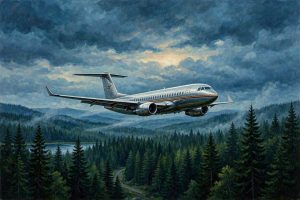
He was never seen again.
The FBI launched one of the longest investigations in its history, interviewing hundreds of suspects over the decades. In 1980, a young boy digging on a Columbia River beach found $5,800 of the ransom money, its serial numbers matching — deepening the mystery instead of solving it. Did Cooper die in the jump? Did he walk away and live quietly among us? In 2016, the FBI officially closed the case, unsolved.
To this day, “Cooper sleuths” gather at annual conventions, new suspects surface every few years, and the legend keeps growing. D.B. Cooper remains the only unsolved commercial skyjacking in American history — the man who fell out of the sky and into folklore.